Courtyard beats street
In the same building, the courtyard side is often 10 to 15 dB quieter than the street side. Ask which way the bedroom faces: it matters more than the district.
Living · Topic
Salzburg is quietest in Gneis Süd, Parsch and Gneis.
Quiet is measurable. wohnwahn evaluated the official environmental noise map (road, motorway and rail) for every inhabited 250 m cell in Salzburg, day and night separately. At night 56% of residential spots stay below 45 dB.
And because a district is not an address: the map below shows the exact spot, not the district average. One honest caveat: in Salzburg the strategic noise map covers the main traffic sources, not every side street, so "quiet" can also mean "not mapped": the noise layer on the search map shows per address what was measured.
Share of inhabited residential cells below 55 dB traffic noise by day. Linked: the full district profile in the Grätzl atlas.
Official environmental noise map 2022 · evaluated per 250 m cell · Data as of: October 2026
Method: loudest official noise zone per inhabited 250 m cell, clipped to the real district boundary. Honest caveat: even Salzburg’s loudest district (Kasern: 14% quiet spots) has calm courtyards, and quiet districts have loud main roads. The map above shows the exact spot.
Currently 7 listings sit on wohnwahn in an officially quiet spot: under 60 dB by day, the level at which Austria has to plan noise protection. That is exactly what the “Quiet location” filter in the search does. Each card shows the noise band of its location.
 quiet day & night · under 55 dBAigenLuxury residence on the Salzach€ 1,400,000 · 3.5 rm · 83.3 m²
 quiet day & night · under 55 dBAigenLuxury Penthouse on the Salzach€ 1,900,000 · 1.5 rm · 87.1 m²
 quiet day & night · under 55 dBAigenLuxury Residence on the Salzach€ 1,400,000 · 3.5 rm · 83 m²
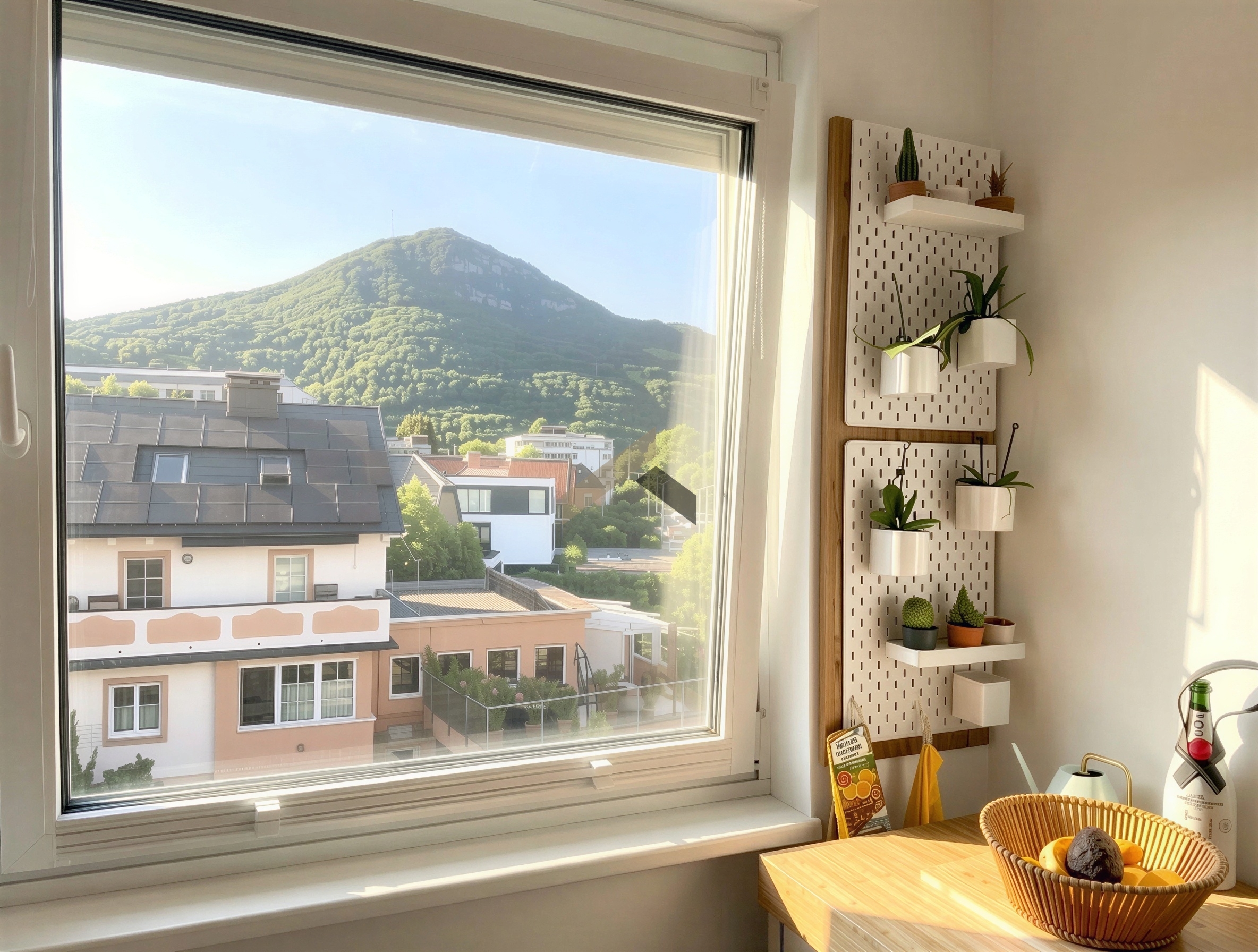 quiet day & night · under 55 dBAltstadtSpacious 5-Room Freehold Apartment with Two Sunny Loggias and Unique Salzburg Panorama€ 495,000 · 5 rm · 105 m²
 day 55–59 dBAigenLuxury domicile on the Salzach€ 1,300,000 · 3.5 rm · 83.3 m²
 day 55–59 dBAigenLuxury residence on the Salzach€ 1,600,000 · 3.5 rm · 83 m²
 day 55–59 dBLieferingQuiet Living by the Saalach€ 549,000 · 3 rm · 81.6 m²
7 listingsSee all matching listings →
Green means quiet. Every square is an inhabited 250 m cell with the loudest official traffic-noise zone (road, motorway, rail).
Only inhabited cells are coloured (woods and fields are not). Tap the map: you’ll see the noise band for that exact spot, day and night.
Quiet often reads as “remote”. These districts prove the opposite: share of residential cells that are below 55 dB AND within 25 minutes of Hanuschplatz by transit (matched per cell, not district averages).
The share of quiet residential spots in the surrounding municipalities. One honest caveat: outside the Salzburg agglomeration the strategic noise map only covers major roads and railways, so “quiet” there can also mean “not mapped”. Local through-roads may be louder than the data shows.
In the same building, the courtyard side is often 10 to 15 dB quieter than the street side. Ask which way the bedroom faces: it matters more than the district.
The official map has separate night values (Lnight). A road that is fine by day can be the reason you wake up at 5 a.m. Check both: the map above has a night toggle.
Rail noise comes in intervals, road noise is constant. Many people sleep fine next to a rail line but not next to a four-lane road at the same dB level. Look at what the source is.
On the wohnwahn search map, tap any point: “What’s here?” shows the official noise band, heat load, trees and travel times for that exact spot, before you book a viewing.
By share of quiet residential spots it is Gneis Süd: 100% of inhabited cells are below 55 dB of traffic noise by day, followed by Parsch (89%) and Gneis (83%). Source: official environmental noise map, evaluated per 250 m cell.
62% of inhabited residential cells are below 55 dB by day, 56% below 45 dB at night. So quiet living in Salzburg is realistic, but it depends heavily on the exact spot.
55 dB (Lden, day-evening-night average) roughly corresponds to a calm side street. The strategic noise map only maps zones above 55 dB by day and 45 dB at night; anything below is not considered a relevant traffic noise load.
No. Gneis Süd for example: 100% of its residential spots are quiet AND within 25 minutes of Hanuschplatz by transit. Quiet and central is rarer, but it exists, and the data shows where.
Strategic environmental noise map 2022 (laerminfo.at, Federal Ministry BMK, CC BY), the EU-wide standard that is renewed every five years. wohnwahn evaluates it per inhabited 250 m cell and refreshes the evaluation monthly (as of October 2026). Outside the Salzburg agglomeration only major traffic sources are mapped.
More honest data on where to live well in Salzburg and the surrounding area.
This topic inViennaGrazLinzSt. PöltenInnsbruckBregenzKlagenfurtEisenstadt
Filter the search, tap any address on the map, and see noise, heat, greenery and real travel times before the viewing. Free and independent.
Look up any address on the Salzburg noise map →How wohnwahn rates locations →Explore all districts in the atlas →Cool living →Green living →Living by the water →Family-friendly →Sunny living →
Sources: strategic environmental noise map 2022 (laerminfo.at / BMK, CC BY) · transit travel times: own routing on the Salzburg AG (trolleybus) and ÖBB timetables.