Guide · Houses
A house in or around Vienna: renting, buying, and above all: where?
Houses are scarce within Vienna; the real house market sits at the city edge and in the surrounding towns. The most important question is therefore not "which house" but "which place": commuting differs by worlds between towns. Here are the real transit times for all surrounding municipalities, Vienna's village-like corners and the checklist that differs from flat-buying.
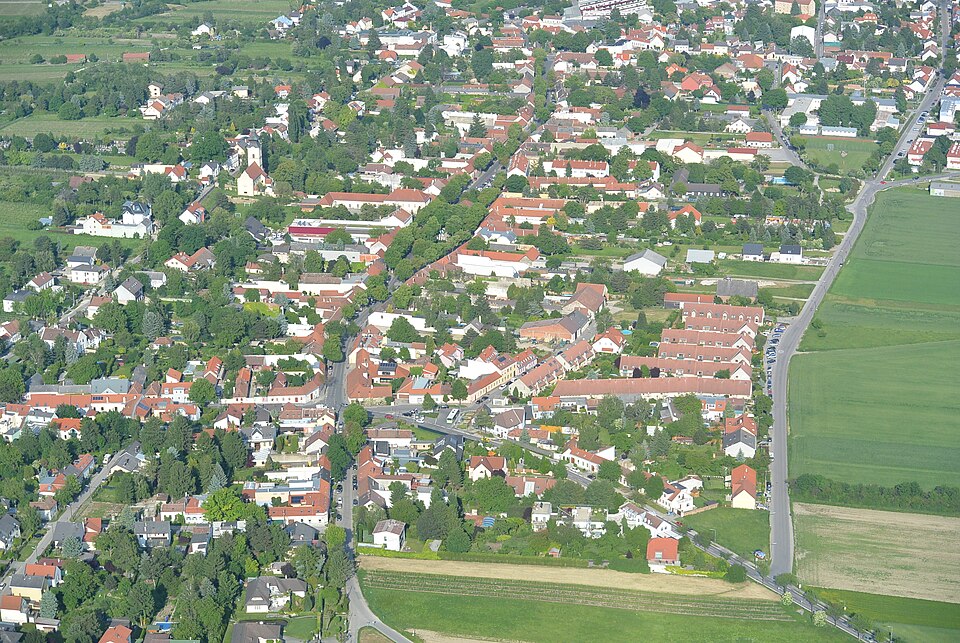
Houses within Vienna: the village edges
Within Vienna, single-family and terraced houses concentrate in the outer districts: Liesing (with the old village core of Mauer), Hietzing, Penzing, Döbling with its wine villages like Grinzing and Neustift, plus the transitional areas of Floridsdorf (Stammersdorf) and Donaustadt. Advantage: Viennese infrastructure, metro or S-Bahn often within reach. Disadvantage: a small supply and prices to match.
How the outer districts compare on greenery, quiet and connection is shown in the Neighbourhood Atlas per district, including which corner of a large district is the right one.
Browse the districts in the Atlas →
The surroundings in the commute check: every town with real transit times
We calculated the real transit time to Stephansplatz for every surrounding town, per inhabited area, not from the town sign. The fastest is Schwechat at around 33 minutes median. And the spot within the town matters: in Klosterneuburg, 24 minutes separate the station area from the town edge.
| Town | Transit · median | best spot | quiet areas |
|---|---|---|---|
| Schwechat | ≈ 33 min | ≈ 16 min | 44 % |
| Hennersdorf | ≈ 34 min | ≈ 27 min | 96 % |
| Langenzersdorf | ≈ 35 min | ≈ 26 min | 50 % |
| Gerasdorf bei Wien | ≈ 36 min | ≈ 26 min | 76 % |
| Vösendorf | ≈ 36 min | ≈ 28 min | 40 % |
| Maria-Lanzendorf | ≈ 36 min | ≈ 31 min | 100 % |
| Korneuburg | ≈ 38 min | ≈ 27 min | 51 % |
| Brunn am Gebirge | ≈ 39 min | ≈ 30 min | 16 % |
| Wiener Neudorf | ≈ 39 min | ≈ 34 min | 5 % |
| Mödling | ≈ 40 min | ≈ 29 min | 52 % |
| Perchtoldsdorf | ≈ 40 min | ≈ 26 min | 53 % |
| Purkersdorf | ≈ 41 min | ≈ 27 min | 56 % |
| Biedermannsdorf | ≈ 42 min | ≈ 31 min | 58 % |
| Klosterneuburg | ≈ 44 min | ≈ 20 min | 81 % |
| Maria Enzersdorf | ≈ 44 min | ≈ 34 min | 53 % |
| Guntramsdorf | ≈ 46 min | ≈ 34 min | 42 % |
| Baden | ≈ 47 min | ≈ 32 min | 68 % |
| Groß-Enzersdorf | ≈ 52 min | ≈ 35 min | 93 % |
| Stockerau | ≈ 53 min | ≈ 33 min | 54 % |
| Pressbaum | ≈ 55 min | ≈ 31 min | 65 % |
| Sieghartskirchen | ≈ 62 min | ≈ 44 min | 95 % |
| Bad Pirawarth | ≈ 66 min | ≈ 58 min | 100 % |
| Auersthal | ≈ 86 min | ≈ 80 min | 100 % |
Transit time to Stephansplatz (weekday, median over inhabited areas; best spot = fastest cell, usually near the station). Quiet areas: share below 55 dB daytime traffic noise. Honest caveat: outside Vienna the timetable covers rail and Wiener Linien only; local regional buses are partly missing, so real times can be better with a bus connection.
The lesson from the data: station proximity beats the town
The biggest mistake in the suburban house hunt: looking only at the town name. Within the same municipality, living near the station often saves half an hour of commuting versus the town edge, every day, in both directions. A house ten walking minutes from the S-Bahn in a "slow" town beats the cheaper house at the field edge of a "fast" one.
And price the commute honestly: 30 extra minutes each way costs over 200 hours a year. For cars, doubly so: our times are transit times, and the morning traffic on the A2, A4 and the Tangente is its own reality.
The house checklist: what differs from flats
- Check the zoning
- Residential building land is the baseline; for extensions, basement conversions or plot splits, the municipal zoning and building plan decides.
- Flood & natural hazards
- Before any purchase, check the address in the official hazard map HORA (hora.gv.at), especially near streams and in Wienerwald valleys.
- Heating & renovation state
- Ask for the energy certificate (mandatory) and price heating and insulation realistically: a pending heating and window renovation quickly costs five to six figures.
- Sewer, water, access
- Sewer connection or septic tank? Own well? Public access or easement across a neighbouring plot? All land-register and municipality topics, clarify before the offer.
- You carry the running costs
- With a house there is no building management doing the accounts: insurance, chimney sweep, sewer and base fees, maintenance, all yours. A buffer of 1 to 2 euros per square metre per month is realistic.
- Purchase costs like a flat
- Property transfer tax, land register, contract drafting and possibly an agent add up to around 10 percent of the price. The details are in the buyer guide.
Purchase costs in detail: the buyer guide →
Renting a house: possible, but a tight market
Rental houses are the scarcest segment of all: few offers, often fixed-term, and family demand is high. Realistic strategies: widen the search to the city edge plus the surroundings, set a search alert (good rental houses are gone in days) and consider terraced houses, the most common rental-house format. Legally: one- and two-family houses largely fall outside the Tenancy Act, the rent is freely agreed, so the contract matters twice as much.
Common questions about houses in and around Vienna
Where does the house hunt around Vienna pay off most?
Where S-Bahn access and price align: the data favours towns with a rail stop and a short transit median (see table), and within the town, the station area. The further from the rails, the cheaper it gets, but the more expensive every working day becomes.
Is a house in the surroundings cheaper than in Vienna?
Usually clearly so, for the same size: Vienna's outer districts are the most expensive house segment. We deliberately do not publish per-town price tables, the data is too thin for that; for land-price orientation, the freely accessible bodenpreise.at works.
How long do you really commute from the surroundings?
By transit it varies a lot by town and spot: from around 33 minutes median (Schwechat) to over an hour at the edge of poorly connected towns. The table above shows median and best spot per town.
Can I rent a house in Vienna at all?
Yes, but the supply is small and often fixed-term. Your best chances are at the city edge (Liesing, Floridsdorf, Donaustadt) and in the surroundings, mostly terraced houses. A search alert is almost mandatory here.
What purchase costs come with a house?
The same as with a flat: property transfer tax, land-register entry, contract drafting and possibly agent commission, together around 10 percent of the price. With a house, ongoing maintenance and all running costs are yours on top.
What should I check on an older house?
Energy certificate and heating system (price renovations realistically), basement moisture, roof, wiring, plus zoning, sewer connection and the official flood map HORA. In doubt, a surveyor before the offer pays off, because the offer is binding.
Read on
- Rent a house in Vienna: what is listed in the city →
- Rent a house in Lower Austria: every district →
- Commuting to Vienna: the town ranking in detail →
- Buying property: costs & process →
- The surroundings in the Neighbourhood Atlas →
As of July 2026 · Commute and noise data: own analysis (refreshed monthly) · Orientation, not legal advice